HPV Prevelance and Targeted HPV Vaccination Recommendation for High-Risk Populations
View Publication (Cancer Medicine 2023) | PMID: 37140209
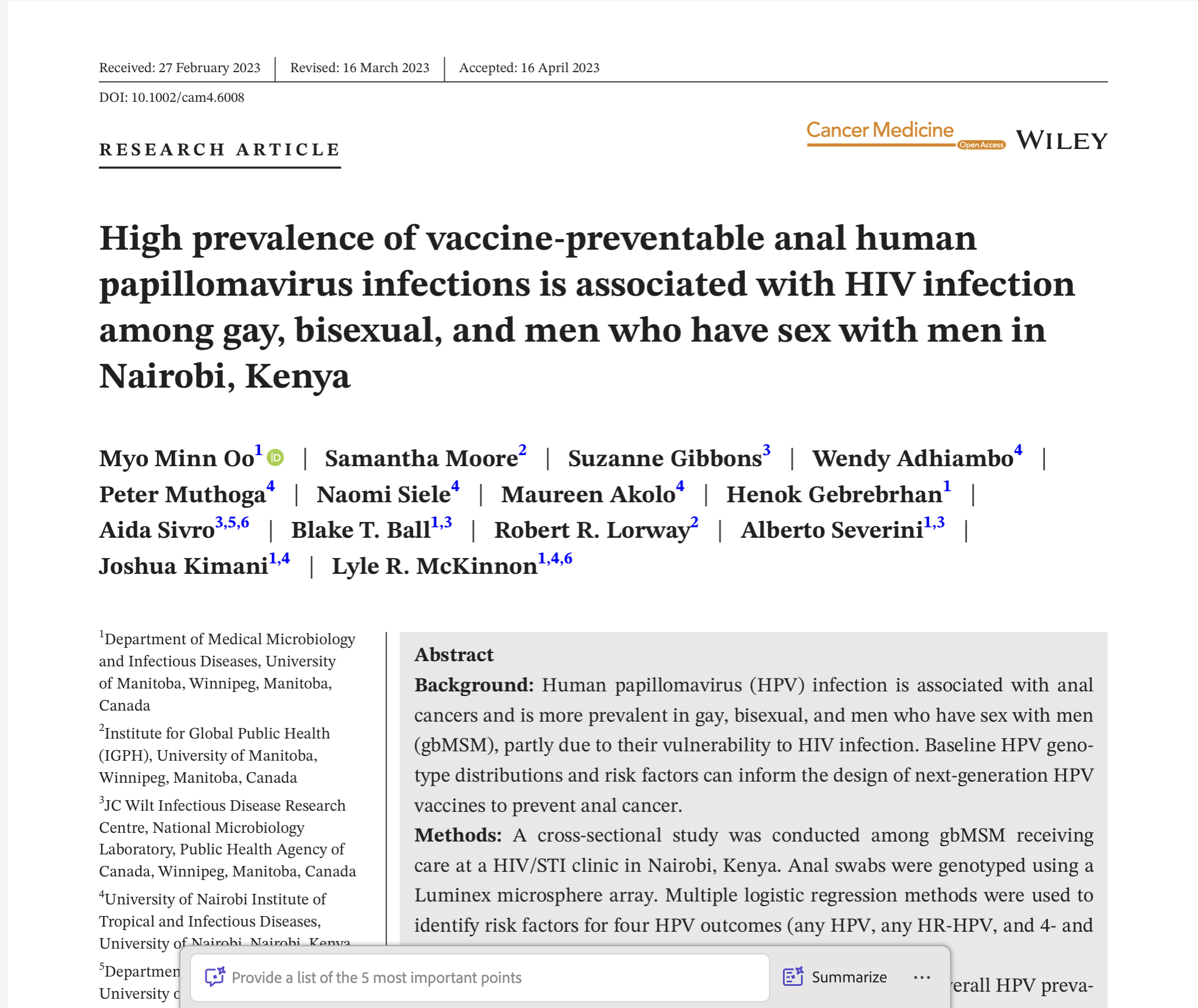
Role: Lead Epidemiologist & First Author
Position: Postdoctoral Fellowship @ University of Manitoba
Domain: Infectious Disease, Global Health, Immunology
1 The Challenge
Gay, bisexual, and men who have sex with men (gbMSM) in sub-Saharan Africa face a disproportionate burden of HIV and HPV-related cancers. However, baseline data on specific HPV genotype distributions—essential for determining the potential impact of 4-valent vs. 9-valent vaccines—was critically lacking in the Kenyan context.
2 The Solution
I led the epidemiological analysis of a cross-sectional study among gbMSM in Nairobi. By leveraging multiple logistic regression and genotype-specific modeling, I quantified the overlap between HIV status and vaccine-preventable HPV types.
- Risk Factor Identification: Conducted multivariate analysis revealing that HIV status was the strongest predictor of HR-HPV infection (aOR: 8.9), while being married to a woman was a significant social risk factor (aOR: 8.1).
- Vaccine Efficacy Assessment (Proxy): Evaluated the potential coverage of current vaccines, determining that the 9-valent Gardasil vaccine would cover 61% of the HPV types circulating in this specific cohort.
- Policy Advocacy: Translated complex genotype data into a clear public health mandate, calling for targeted HPV vaccination campaigns for Kenyan gbMSM.
3 Technical Deep-Dive
- Statistical Modeling: Utilized R for multiple logistic regression and odds ratio calculations with 95% confidence intervals.
- Data Visualization: Created prevalence plots and genotype distribution charts to communicate the “preventable burden” to stakeholders.
- Tech Stack:
R,tidyverse,gtsummary,officeverse. - Impact: Provided the first comprehensive evidence for targeted HPV vaccination in this population, directly informing regional cancer prevention strategies.